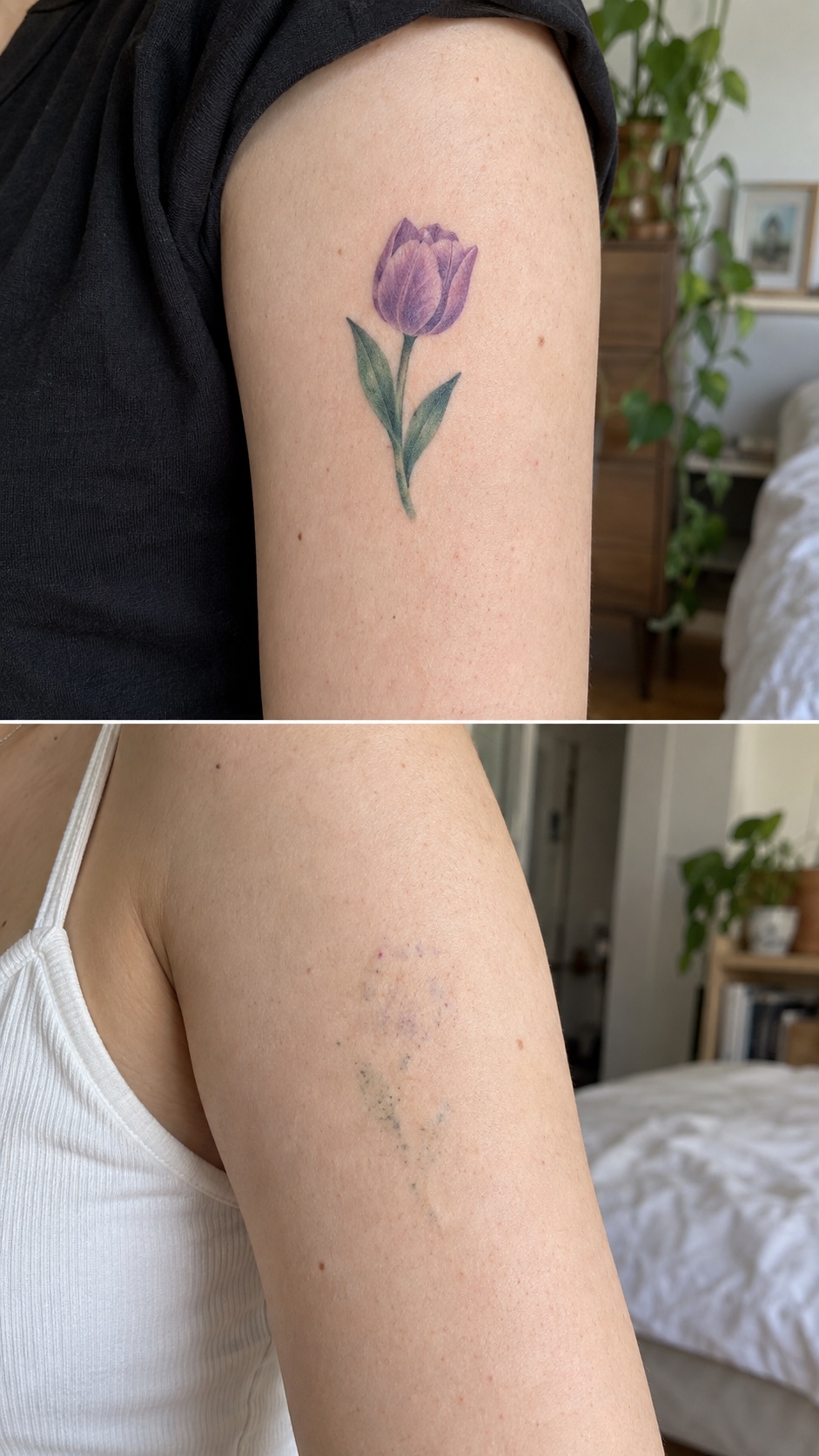
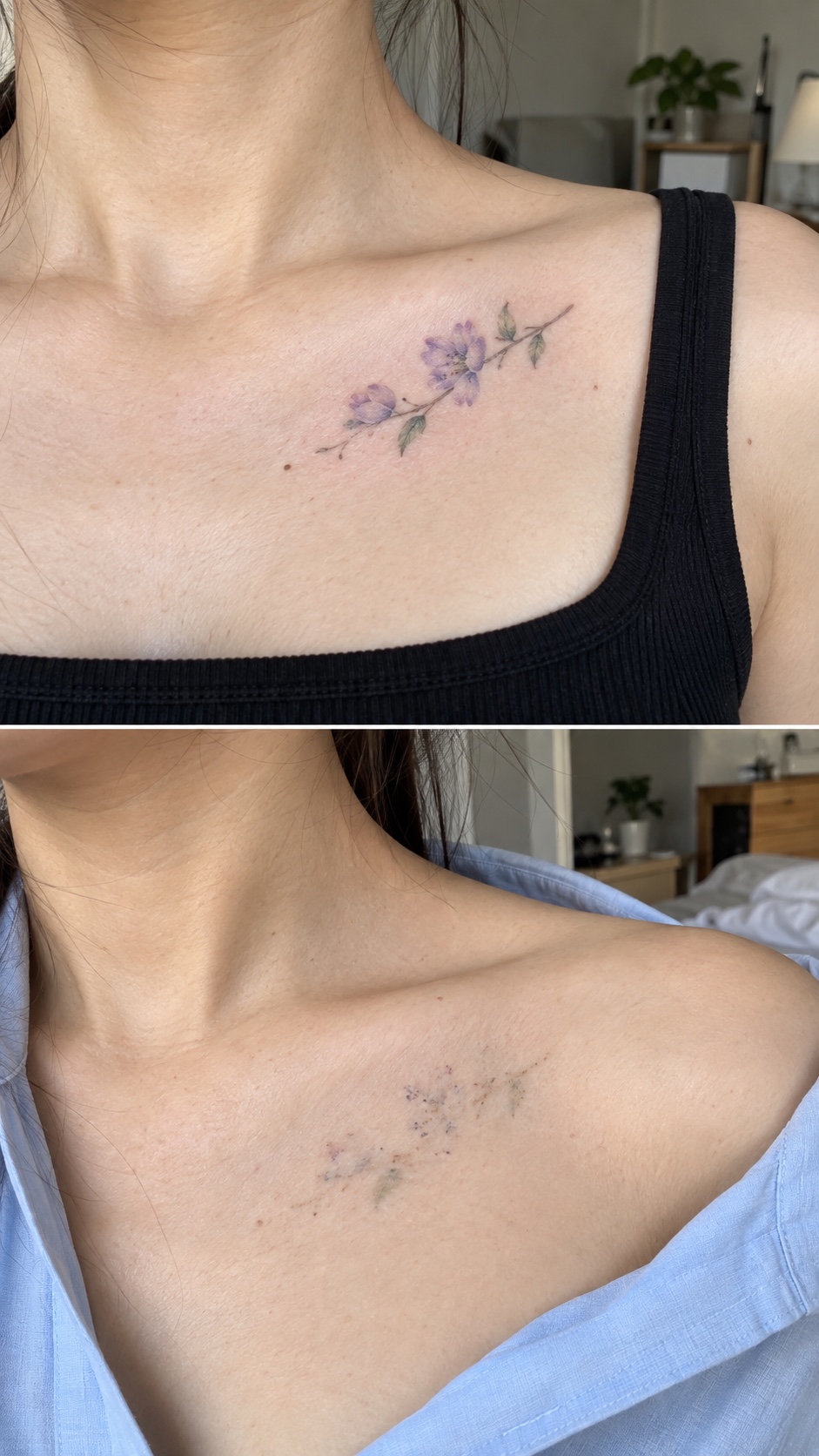
Real client cases; individual results vary. View more cases →
Why do colour tattoos need a closer assessment?
Lasers work by targeting how ink absorbs light. Black-and-grey and colour tattoos may respond differently, and different colours in the same piece can fade at different speeds. That's why multi-colour tattoos are often observed in stages, rather than treated with one setting for every colour.
| Assessment focus | What we look at |
|---|---|
| Colour mix | Whether black, red, blue, green, purple, yellow and other inks are mixed, layered or covered |
| Saturation | Light linework, watercolour-style, or dense solid colour |
| Skin condition | Skin tone, sun exposure, tendency to scar, and any current broken skin or inflammation |
| Previous treatment | Whether it's been treated before, or has shown colour change or unusual reactions |
“Colour” isn't one category; it's a set of different problems. PicoWay's different wavelengths and handpieces can be used for different inks, but whether they suit you and in what order must be based on an individual assessment.
How should you read the cases?
The most useful comparison is a case with a similar colour mix, density, location and session count, not a single “completely gone” photo. In the Removal-KL case library, colour cases appear under “Colour ink”, and those with four or more sessions also appear under “4+ sessions”.
Tell us before you book
- Which colours the tattoo contains, and whether there is white, highlights or skin-tone ink
- Whether it has been touched up, covered up or worked on by several artists
- How many times it has been treated, with what device, and when the last session was
- Whether you want it as gone as possible, or just faded for a new cover-up